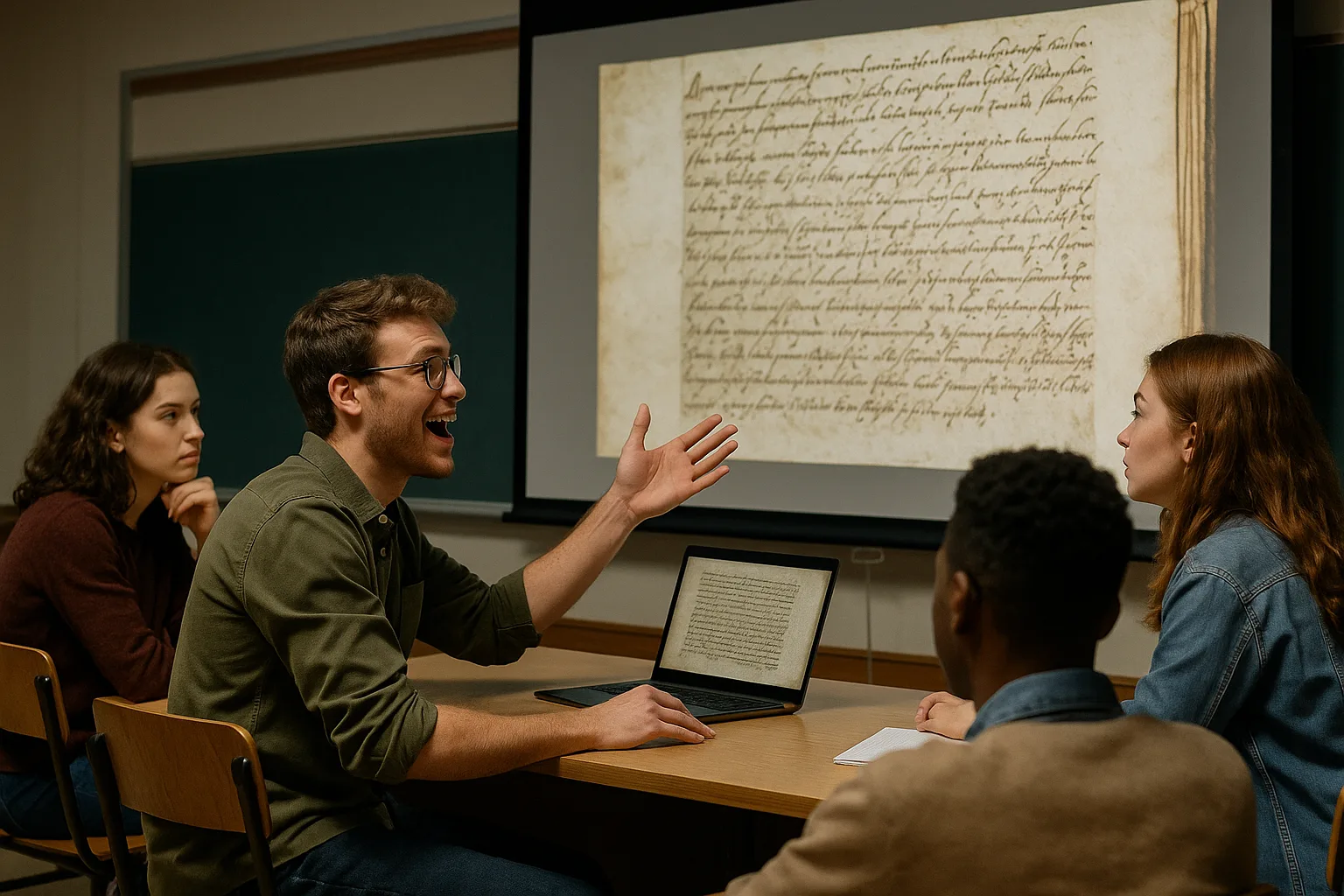
Yenisei to the Cloud: Digital Humanities, Creative Learning, and the Future of Cultural Professions in Krasnoyarsk
Introduction
Krasnoyarsk sits where the Yenisei carves through Siberia — a landscape of powerful natural and cultural contrasts. As digitization, new pedagogies, and creative practice reshape cultural work worldwide, Krasnoyarsk has an opportunity to become a regional leader by combining local heritage with modern tools and mindsets. This article outlines practical pathways for integrating digital humanities, contemporary education methods, and self-development strategies to future-proof cultural professions across the city and region.
Digital humanities: what this can look like in Krasnoyarsk
Digital humanities (DH) means using digital tools to research, preserve, interpret, and share culture. In Krasnoyarsk, DH projects can build community knowledge and amplify regional voices.
— Digitize and publish local archives and collections
— Digitally catalog museum artifacts, photographic archives, and oral histories to increase accessibility.
— Create open metadata standards to enable search, reuse, and academic collaboration.
— Virtual and hybrid exhibitions
— Develop 360° virtual tours of galleries, historic sites, and natural landmarks (e.g., Stolby trails) to attract remote audiences and support education.
— Community-driven oral history and place-mapping
— Co-create story-maps with residents to preserve family histories, indigenous knowledge, and industrial heritage along the Yenisei.
— Data-driven cultural research
— Use text-mining and GIS to analyze regional trends in language, migration, and cultural practices.
— Local language and intangible heritage preservation
— Record and annotate songs, dialects, craft techniques, and ritual practices in multimedia formats.
Modern educational practices for cultural learning
Updating pedagogy in cultural institutions and schools is key to raising digital literacy and creative confidence.
— Project-based and interdisciplinary learning
— Encourage students and museum visitors to collaborate on real projects (exhibitions, digital archives, apps).
— Blended and flipped classrooms
— Combine online micro-courses about archival practice, digital storytelling, and UX design with in-person workshops.
— Makerspaces and lab-based learning
— Establish small digital labs for 3D scanning, AR/VR prototyping, and audio-visual editing inside libraries and cultural centers.
— Partnerships between schools, universities, and cultural institutions
— Create internship routes and joint courses that place learners into museums, archives, and creative firms.
— Microcredentials and modular learning
— Offer short certificates in cultural data management, digital curation, or community engagement for continuing professional development.
Self-development and creative thinking for cultural professionals
Cultural workers need both technical skills and creative mindsets to navigate rapid change.
— Cultivate design thinking and experimentation
— Train staff to prototype exhibits and programs quickly, test with audiences, and iterate.
— Lifelong learning pathways
— Promote short courses, peer learning circles, and online study groups to keep skills current.
— Mentoring and cross-sector secondments
— Enable exchanges between technologists, artists, and museum professionals to foster hybrid competencies.
— Creative routines and reflective practice
— Encourage personal projects, sketchbooks, and reflective logs to spark ideas and document learning.
— Entrepreneurship and audience development skills
— Teach basics of cultural entrepreneurship: grant writing, crowdfunding, audience analytics, and marketing.
Reimagining cultural professions: roles for the future
As technology and audiences change, new roles and blended job profiles will emerge.
— Digital curator / data curator
— Manages digital collections, metadata, and long-term accessibility.
— Experience designer
— Crafts visitor journeys that combine physical and digital interactions.
— Community engagement technologist
— Builds participatory projects and manages co-creation platforms.
— Preservation technologist
— Applies scanning, storage, and migration strategies for long-term digital preservation.
— Cultural entrepreneur / program producer
— Develops revenue-generating formats (digital memberships, virtual events, educational products).
Practical roadmap for Krasnoyarsk: pilot projects and institutional actions
A phased, locally grounded approach will produce visible wins and build capacity.
Phase 1 — Seed and showcase (6–12 months)
— Launch a pilot digital exhibition combining scanned artifacts and oral histories from a local museum.
— Set up a basic digital lab (one workstation, scanner, 3D camera) in a cultural center or library.
— Run a short workshop series on digital storytelling for museum staff and university students.
Phase 2 — Scale and integrate (12–24 months)
— Create partnerships between at least one university department, a museum, and a city school to run semester-long co-created projects.
— Develop a community archive platform with simple tools for residents to upload images and stories.
— Offer microcredentials in digital curation and audience experience.
Phase 3 — Sustain and innovate (24–48 months)
— Launch an annual hackathon or residency that pairs technologists, artists, and local elders to prototype new cultural services.
— Implement conservation-grade digital preservation policies across participating institutions.
— Seek regional and international collaborations for research and funding.
Who should act
— City cultural institutions: host pilots, open collections, share expertise.
— Universities and schools: provide pedagogical frameworks, students, and technical support.
— Local government: enable funding, policy support, and public access infrastructure.
— NGOs and community groups: lead participatory projects and ensure inclusivity.
— Businesses and tech partners: contribute tools, mentorship, and sponsorship.
Funding and sustainability ideas
— Small public grants and municipal seed funds for pilots.
— Crowdfunding local community projects.
— Fee-based services (digital reproductions, virtual tours) directed back into maintenance.
— Partnerships with regional tech firms and telecoms for infrastructure support.
Measuring impact and success
Choose a mix of quantitative and qualitative indicators:
— Reach and accessibility: number of digitized items, website visits, remote tour participants.
— Community engagement: submissions to community archive, volunteers, co-created exhibits.
— Skills development: participants completing microcredentials, staff upskilling rates.
— Economic and institutional outcomes: new revenue streams,